

Life is hard, and sometimes the lessons we have to learn are just as challenging.
I remember Wayne Dyer, often known as the “father of motivation,” saying that even when bad things happen, there are lessons hidden in those experiences. Painful though they may be, every time we suffer a loss or endure a difficult experience, we learn how to manage our sadness and cope with the pain. Over time, we develop tools to help us emerge from these experiences with greater ease.
Sometimes, it’s important to sit with the experience, allowing it to percolate before we can fully address it. Recognising our feelings and emotions is essential. While we may not always be able to act right away, acknowledging these emotions is a vital step. Whether we can respond immediately or need time to process, it’s crucial to give ourselves space to breathe and take stock of what’s happening around us.
For me, Tapping (EFT), along with deep breathing and Reiki, are my go-to tools. These practices work on a subconscious level, allowing me to process my emotions without needing to articulate them verbally. Even silent tapping can be highly effective. Expressing negative feelings – no matter how painful – is healthier than bottling them up. The key is to get them out, using whatever words feel right for you.
Grief comes in many forms, not just the death of a loved one
You might experience grief when:
- Someone close to you passes away.
- You move away from a place you’ve always lived.
- You don’t get the job you wanted.
- A relationship or job comes to an end.
- You undergo surgery, losing a part of your body (e.g., breast, colon, arm, leg).
- You leave school or university.
- You don’t pass an important test or exam you worked hard for.
The list is endless, and the grief can be big or small, but the emotional impact can feel the same. In that moment, it’s often all-consuming.
So, what can you do to help yourself?
Here are a few steps:
- Acknowledge your feelings: Allow yourself to sit with your emotions for a while. They are valid, and they are yours – no matter what anyone else says.
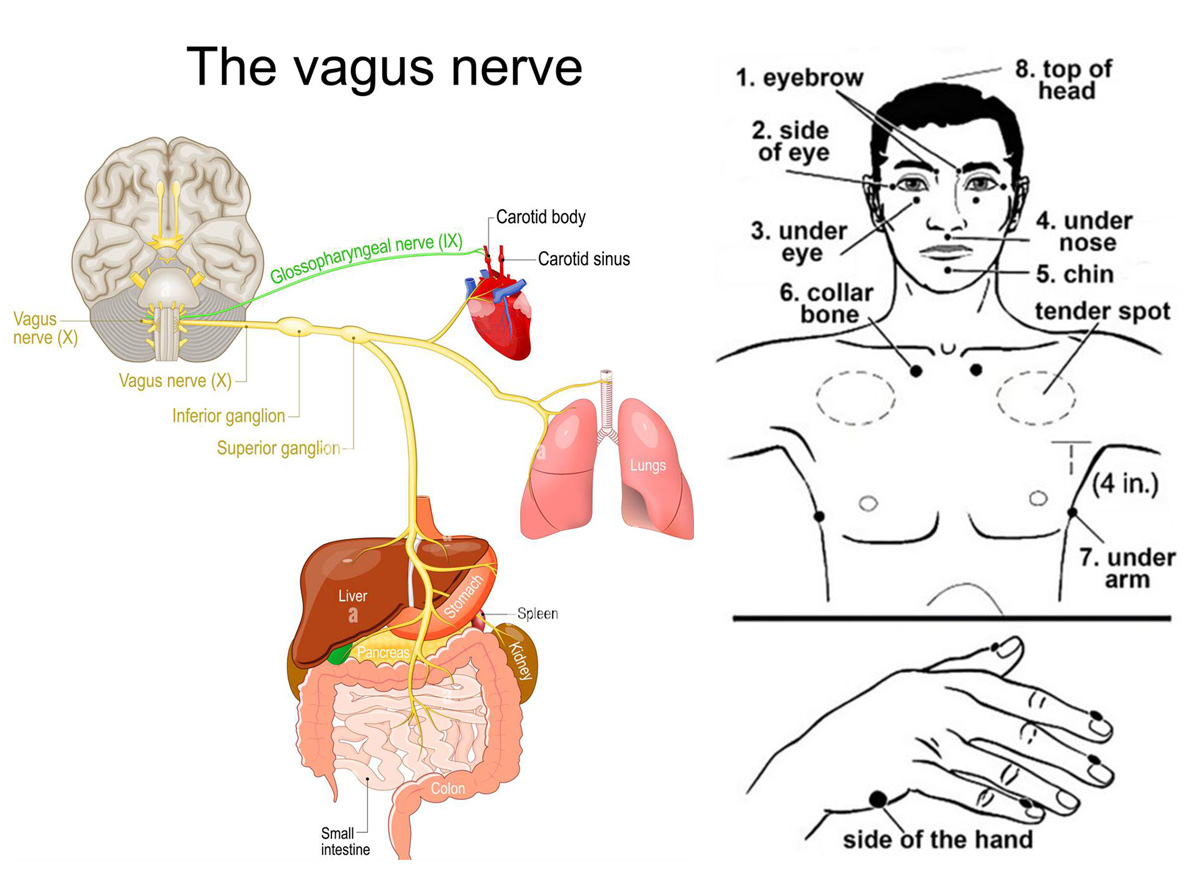
- Deep breathing: This helps calm your vagus nerve (see image below).
- Tapping (EFT): If you’re in a safe space, tap around the face and upper body while expressing those negative thoughts. It doesn’t matter if your words are random, incomplete sentences, or don’t seem to make sense (see image below for tapping points).
The purpose of tapping is to give you the freedom to express out loud (or in your head, if you’re in public) everything you’re feeling and thinking. Pay attention to the emotions that surface – whether it’s sadness, anger, disappointment, frustration, or confusion.
Notice how your body reacts as you express these thoughts. Do you feel a lump in your throat, tightness in your chest, or a band of pressure around your head? Use these physical sensations along with your emotional words as you tap.
By giving yourself this time, you’ll often find the tapping helps calm those intense emotions, preventing them from becoming overwhelming. If they’re already overwhelming, a professional like me can help support you through whatever you’re experiencing.
The most important thing to remember is:
IT’S OKAY NOT TO BE OKAY.
Grief is different for each of us, and we all cope in our own way. Your way is just right for you.